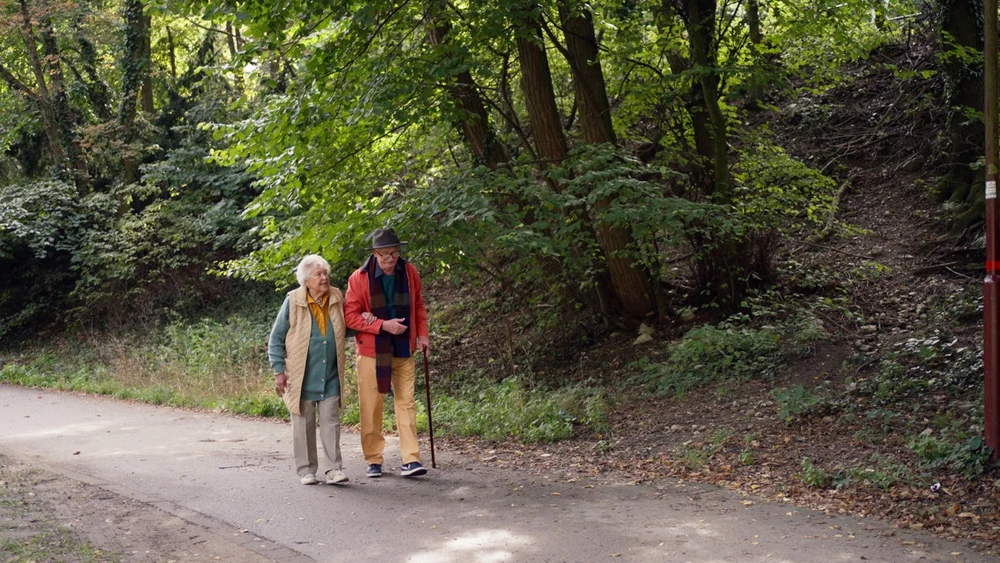
Aging Does Not Follow a Single Path: Frailty, Physical Activity, and Mobility Among Brazil’s Oldest Adults
New research using nationally representative data from Brazil examines differences in physical activity and mobility across the frailty spectrum among adults aged 80 and older.
Aging does not follow a single path. Among adults who reach their 80s and beyond, some remain physically active and mobile, while others experience increasing difficulty with everyday movement. Understanding why these differences emerge is important not only for individuals and families, but also for health systems and communities preparing for a rapidly aging population.
A new study published in the Journal of Applied Gerontology examines this question in Brazil, where researchers analyzed nationally representative data from the Brazilian Longitudinal Study of Aging (ELSI-Brazil). The study, led by Ziyue Wang, visiting student at the University of Illinois Urbana-Champaign, with Emerson Sebastião of the Department of Health and Kinesiology serving as senior author, focused specifically on adults aged 80 and older, often described as the “oldest old.”
The researchers wanted to know two things: How common is frailty among Brazil’s oldest adults, and how is frailty related to physical activity and mobility in this population?
Looking beyond age alone
Frailty is not simply another word for being old. It describes a state of increased vulnerability to health stressors and is commonly understood along a spectrum, from robust health to pre-frailty and frailty. This distinction matters because people of the same chronological age can have very different levels of physical resilience and independence.
Using data from 1,171 adults participating in the second wave of ELSI-Brazil, the research team examined frailty status alongside physical activity and mobility. ELSI-Brazil is a national research resource designed to study health, psychosocial, and economic aspects of aging in Brazil. The analysis used statistical models that accounted for other factors that could influence the relationships being studied.
A relatively small frail group, but a meaningful difference
One of the striking findings was that frailty was not the dominant state among these oldest-old adults. About 13% were classified as robust, 73% as pre-frail, and 14% as frail. In other words, most participants were not frail, even though they were all age 80 or older.
At the same time, the differences across the frailty spectrum were substantial. Adults who were frail were much less likely to meet current physical activity guidelines (at least 150 minutes of moderate physical activity per week) than their robust counterparts and were also more likely to experience difficulty walking short distances. The association between frailty and physical inactivity was particularly strong, while mobility impairment provided another indication that frailty is closely connected to the ability to move through everyday life.
These findings do not mean that physical inactivity causes frailty, or that becoming more active will automatically prevent frailty. The study is based on observational data, so cause and effect cannot be established. Instead, the results point to an important relationship: among Brazil’s oldest adults, frailty, physical activity, and mobility are closely intertwined.
Why movement matters in the oldest old
The findings add to a broader understanding of what healthy aging can look like. Reaching an advanced age does not necessarily mean losing the capacity to be active, mobile, or independent. At the same time, the results highlight how important it is to identify declining activity and mobility early, before functional limitations become more difficult to reverse.
For researchers and health professionals, the message is not simply to ask whether an older person is “frail” or “not frail.” Looking across the frailty spectrum can reveal meaningful differences in physical activity and mobility that may otherwise be missed. This perspective can help inform efforts to maintain function and independence as people age.
The Brazilian context is especially important. Brazil is experiencing substantial population aging and understanding the health of adults in their 80s and beyond can help inform policies and interventions designed for later life. Nationally representative data such as those from ELSI-Brazil make it possible to move beyond individual stories and examine patterns across the country.
From population data to practical questions
The study also raises a practical question for the next generation of research: how can communities and health professionals support physical activity and mobility across the frailty spectrum? Interventions may need to be tailored to an individual’s functional capacity rather than assuming that one approach will work for everyone over age 80.
For Sebastião, whose research focuses on physical activity, exercise, aging, and functional ability, the findings fit into a larger effort to understand how movement can support health across later life. Rather than viewing advanced age as a single category, this work emphasizes the considerable diversity that exists among older adults, and the importance of preserving opportunities to remain active and mobile.
Read the study: Wang, Z., Bakare, J. O., de Oliveira, R. A., Dos Santos, A. P., Cordeiro, J. F. C., Bohn, L., Han, Q., & Sebastião, E. (2026). Physical activity and mobility impairment across the frailty spectrum among the oldest old: insights from the Brazilian Longitudinal Study of Aging (ELSI-Brazil). Journal of Applied Gerontology, 45(7), 1266–1276. https://doi.org/10.1177/07334648251367133