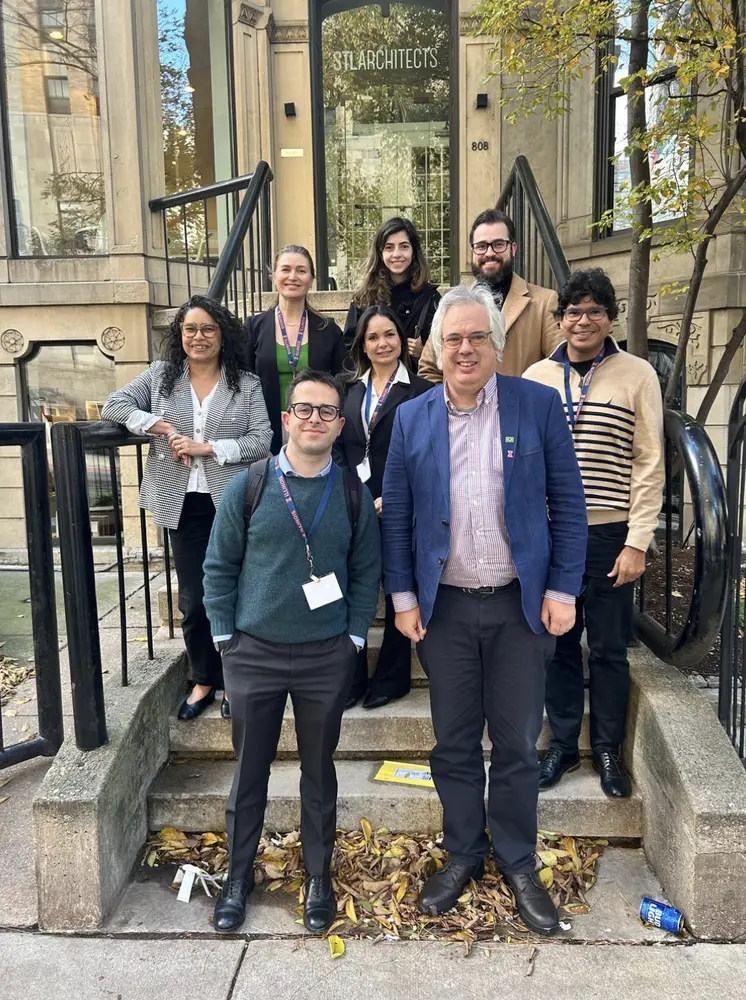
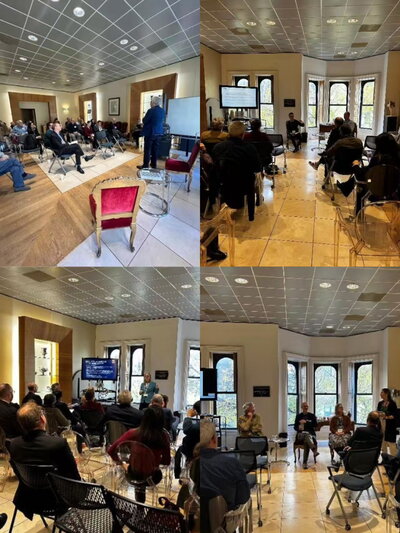
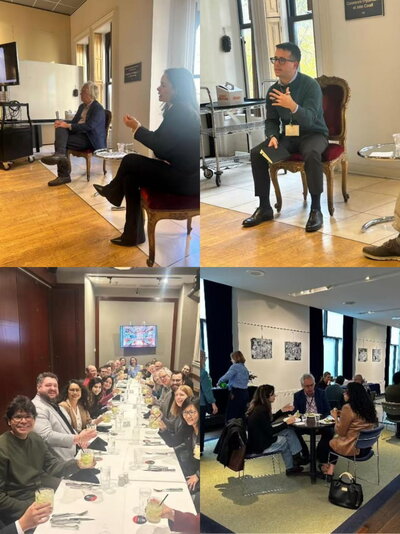
The interdisciplinary scientific conference took place November 12–13, 2026, at the Alliance Française de Chicago, bringing together scholars to examine current trade disputes through historical, economic, and political perspectives. Participants examined whether these disputes represent a break with the past or a continuation of long-standing tensions over markets and state power. Speakers represented universities and institutions across the U.S., Europe, and Brazil. Day one opened with a panel on trade rules and historical change, reaching back to the 1860 Franco-British commercial treaty and the treatment of coal as a strategic good. The next panel analyzed how producers respond to tariffs, with evidence that U.S. firms have been shifting from lobbying to sourcing outside of China once the tariffs have proven to be durable. The second day started with Europe. One presentation focused on the EU’s shift from an open trade agenda to one of trade defense in the face of Chinese overcapacity and U.S. pressure, as well as its increasing network of trade agreements, including the one with Mercosul. The Japan panel examined how the government determines which products are strategic, showing that Japanese firms most exposed to geopolitical disruption prefer diplomacy to protectionism, with the expectation that the government bears more of the cost of diversifying their supply chains in cases of geopolitical issues. A session on regulation and financial markets weighed the costs of over-regulating agricultural biotechnology, comparing Europe to the U.S., and the reasons why it would be important for commodity-exporting countries to increase industrial policies: commodity prices are more subject to the global cycle, making these economies particularly risky and implying a higher interest rate level. The final panel focused on Brazil, assessing its solid export performance, the opportunities of the EU-Mercosul agreement, and the productivity gaps that hold back diversification. This panel also presented the current debate on cross-border payments, drawing on Mercosul’s experience with its Local Currency Payment System (SML) and on the potential of instant payments. The conference closed with a roundtable open to all presenters and guests. The focus was on drawing the links between the various topics that had been covered over the two days and then participants spoke more personally about how they see the current situation and what they think the relations between the countries will be in the coming years. The European Union Center, the Center for East Asian and Pacific Studies, and the College of Agricultural, Consumer and Environmental Sciences hosted the conference. It was co-sponsored by the Erasmus+ Programme of the European Union, the Japan Foundation (New York), the Lemann Center for Brazilian Studies, and the Alliance Française de Chicago.
Image
| Image
|